

Table of Contents
- Why Maintaining Pet Apparel Matters for Longevity
- Start with the Care Label: Reading Instructions Correctly
- How to Remove Pet Hair from Fabric Before Washing
- Hand Washing vs. Machine Washing Pet Apparel
- Washing Fleece Pet Apparel and Other Delicate Materials
- Choosing the Best Laundry Detergent for Dog Clothes
- Drying, Storage, and Repair: Extending Your Pet's Wardrobe
- Frequently Asked Questions
Last Updated: September 25, 2026
Why Maintaining Pet Apparel Matters for Longevity
Your pet's wardrobe takes a beating. Active dogs roll in mud, chase through grass, and shed constantly. Cats scratch and snag fabric. Without proper care, even quality pieces fall apart fast. The good news: to maintain durable pet apparel isn't complicated. It's about understanding what your pet's clothes need and treating them right.

Proper maintenance extends garment life by months or years. A winter coat thrown in the dryer weekly lasts one season; air-dried and stored properly, it survives multiple winters.
Proper care also preserves the features that make durable pet apparel worth buying in the first place. Breathable fabrics stay breathable. Waterproof coatings keep working. Seams stay intact. Your investment actually delivers the comfort and durability you paid for.
Start with the Care Label: Reading Instructions Correctly
The care label is your roadmap. It tells you water temperature, drying method, and what to avoid.
Read the label before the first wash. Look for these key symbols:
- Hand wash only means machine washing will felt or shrink the fabric
- Cold water protects dyes and prevents felting on delicate materials
- Lay flat to dry means the garment can't handle heat or tumble drying
- Do not bleach is non-negotiable, bleach damages synthetic fibers and breaks down waterproof coatings
Different fabrics have different demands. Fleece pet apparel needs gentle handling. Cotton blends can usually handle more agitation. Synthetic fibers tolerate heat better than natural ones, but waterproof coatings don't.

Write down the care instructions or take a photo. Don't rely on memory. When you're loading the wash three months later, you won't remember whether that coat was hand-wash-only or machine-washable.
How to Remove Pet Hair from Fabric Before Washing
Pet hair clogs drains and tangles in washing machine drums. Remove it first so your wash cycle works better and buildup doesn't shorten your machine's lifespan.
Here's the process:
- Use a lint roller on the outside of the garment, rolling in one direction
- Flip the piece inside-out and repeat on the inner surface
- Check seams and cuffs where hair accumulates most
- For stubborn hair, use a damp cloth and wipe in one direction
- Let it air dry before washing if you used a damp cloth
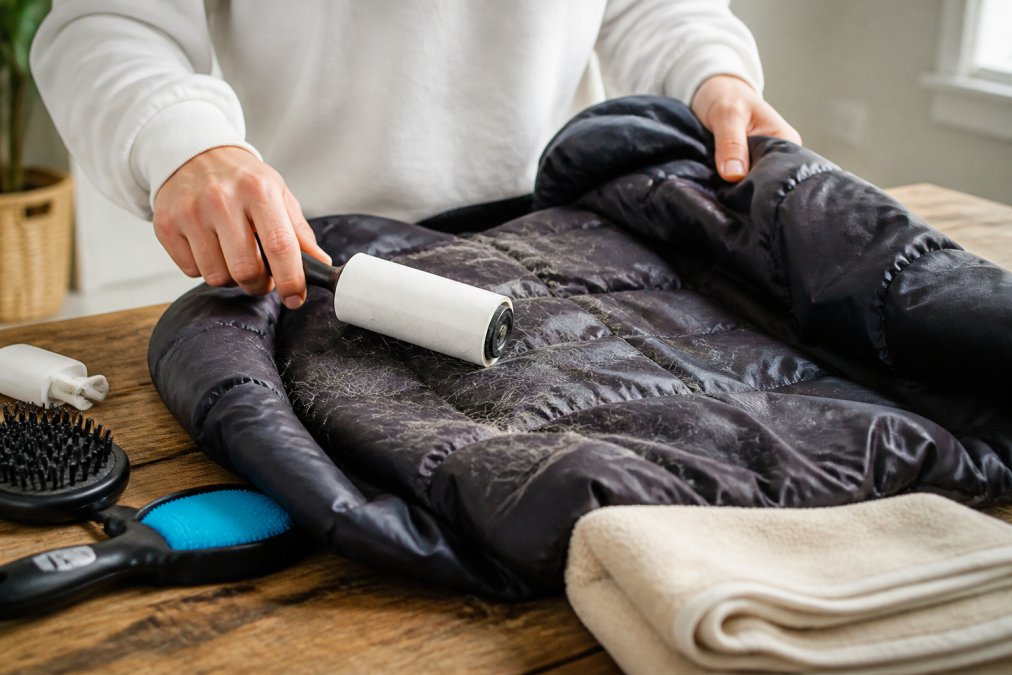
A lint roller works faster than brushing by hand and grabs hair efficiently without damage. For heavier shedding, do two passes to remove visible hair before washing.
Rubber brooms or pet hair removal tools also work. Make this a habit before every wash, it takes three minutes and prevents hair-induced wear.
Hand Washing vs. Machine Washing Pet Apparel
The care label decides this. But understanding why matters.
Hand washing is gentler. You control water temperature and agitation with no spinning, heat, or tumbling. Delicate fabrics like fleece pet apparel need this approach. It takes 10-15 minutes but prevents machine-washing damage.
Machine washing is faster for sturdy synthetic fabrics and cotton blends. Use the delicate cycle, cold water, and mild detergent. Skip the spin cycle if possible; air drying is gentler than centrifuge force.

Here's how to hand wash:
- Fill a sink or basin with cold water
- Add mild detergent (a teaspoon, not a capful)
- Submerge the garment and gently agitate for 2-3 minutes
- Let it soak for 10 minutes
- Rinse in clean cold water twice to remove all soap
- Gently squeeze out water, don't wring or twist
- Lay flat on a clean towel to dry
For machine washing:
- Place the garment in a mesh laundry bag to reduce agitation
- Use the delicate cycle with cold water
- Add a small amount of mild detergent
- Skip the spin cycle if possible
- Remove immediately after washing to prevent mildew
The mesh laundry bag is crucial. It protects the garment from fasteners, zippers, and other clothes that snag delicate fabrics. It's worth the extra step.
Washing Fleece Pet Apparel and Other Delicate Materials
Fleece and Synthetic Blends
Fleece is soft but prone to felting, where fibers compress and lock permanently when exposed to heat, agitation, and moisture. Once felted, the fabric becomes stiff and loses insulating properties permanently.
Fleece pet apparel needs cold water (below 60°F), minimal agitation, and air drying only. Hand wash or use a machine's delicate cycle with a mesh laundry bag. Never use hot water, a dryer, or fabric softener, which breaks down fibers and reduces breathability.
Lay the garment flat on a clean, dry towel to air dry completely. Don't hang it while wet; water weight stretches fabric permanently.
Natural Fibers: Wool and Wool Blends
Wool pet apparel requires similar gentleness. Wool felts more easily than synthetic fleece because its scaly fiber structure locks when agitated in warm water, and it shrinks if exposed to heat.
Wash wool in cold water (below 60°F) with a wool-specific detergent like Woolite or Eucalan, which are pH-neutral and preserve natural oils. Use half a teaspoon per sink of water. Soak for 10 minutes, gently agitate for 2-3 minutes, then rinse twice in cold water until clear.
Gently squeeze out excess water and lay flat on a towel to dry. Wool takes 24-48 hours; rushing it with heat causes permanent shrinkage.
Waterproof and Water-Resistant Coatings
Many durable pet apparel pieces use polyester or nylon with waterproof membranes (polyurethane or silicone coatings). These coatings are fragile and easily damaged by heat, harsh detergents, and fabric softener.
Wash waterproof pet apparel in cold water with mild detergent. Avoid enzyme-based detergents, which break down coatings. Hand washing is safer than machine washing. Never use a dryer, heat melts the membrane and destroys water resistance. Air dry flat or hang in a cool, dry place.
After several washes, waterproof coatings lose effectiveness. Restore water resistance with a waterproofing spray designed for technical fabrics, applied outdoors or in a well-ventilated area. This extends the life of waterproof pet apparel by 1-2 seasons.
Cotton and Cotton Blends
Cotton pet apparel is more forgiving than fleece or wool. It tolerates warmer water (up to 85°F) and slightly more agitation. Machine wash on delicate cycle, but avoid high heat drying, which shrinks cotton and fades dyes. Air dry for longevity.
Cotton blends (cotton mixed with polyester or nylon) should be treated as the most delicate component. If it's 50% cotton and 50% polyester, use cold water and gentle handling to protect both fibers.
Choosing the Best Laundry Detergent for Dog Clothes
Not all detergents are created equal. Standard laundry detergent contains enzymes and brighteners that break down synthetic fibers over time. It also leaves residue that reduces breathability.
Use a mild detergent designed for delicate fabrics with no enzymes (which break down synthetic fibers), no bleach (which damages dyes and coatings), and no fabric softener (which reduces water resistance).
Woolite, Dreft, and similar gentle detergents work well. Baby shampoo also works in a pinch.
Use a teaspoon for a sink full of water. More detergent leaves residue that traps odors and reduces breathability.
Drying, Storage, and Repair: Extending Your Pet's Wardrobe
Drying Methods That Preserve Fabric Integrity
How you dry pet apparel determines how long it lasts. Air drying is always better than machine drying.
Smart Storage to Prevent Mildew and Pest Damage
Repairing Minor Damage Before It Spreads
Small Holes in Synthetic Fabrics
Loose or Broken Seams
Broken or Loose Fasteners
Preventing Damage Before It Happens
- Small holes or tears
- Loose seams at stress points
- Worn velcro or loose snaps
- Pilling on fleece (remove with a fabric shaver or old razor blade, gently scraping the surface)
- Fading or discoloration
Frequently Asked Questions
What's the best way to maintain durable pet apparel so it lasts longer?
Remove pet hair with a lint roller before washing, always check the care label, use mild detergent, and air dry instead of using heat. Store clean pieces in a cool, dry place. These steps prevent shrinkage, felting, and damage to synthetic fibers, ensuring your pet's wardrobe stays fresh and durable through repeated wear.
Can I wash dog clothes with regular laundry detergent?
You can, but mild detergent is better for pet apparel. Regular detergents may be too harsh for delicate fabrics or synthetic fibers used in quality pet clothing. Mild detergent cleans effectively while protecting the textile integrity of your pet's coat. Always use cold water with your chosen detergent and follow the care label instructions for best results.
How often should you wash dog apparel?
Wash pet clothes every 1-2 weeks with regular wear, or more frequently if your pet plays outdoors or gets muddy. Active pets shed sebum and dirt that accumulate on fabric. However, avoid over-washing, as frequent washing can cause shrinkage and wear. Between washes, air out pieces and spot-treat any stains to extend time between full washes.
What fabric does pet hair not stick to easily?
Synthetic fibers like polyester resist pet hair better than natural fabrics. Tightly woven materials and smooth finishes shed pet hair more easily than fuzzy or textured fabrics. Fleece and cotton blends can trap hair, so these materials benefit most from lint rolling before washing. WearWhatToday's polyester winter coats and acrylic options are designed to minimize hair retention while maintaining durability.
Maintaining durable pet apparel requires consistency, but it's simple once you build the habit. Start with the care label, remove pet hair before washing, use mild detergent in cold water, and air dry every time. These steps transform how long your pet's clothes last. WearWhatToday's collection is designed for this kind of care, pieces that respond to proper maintenance by staying soft, breathable, and durable year after year. Shop New and invest in apparel that actually lasts.